

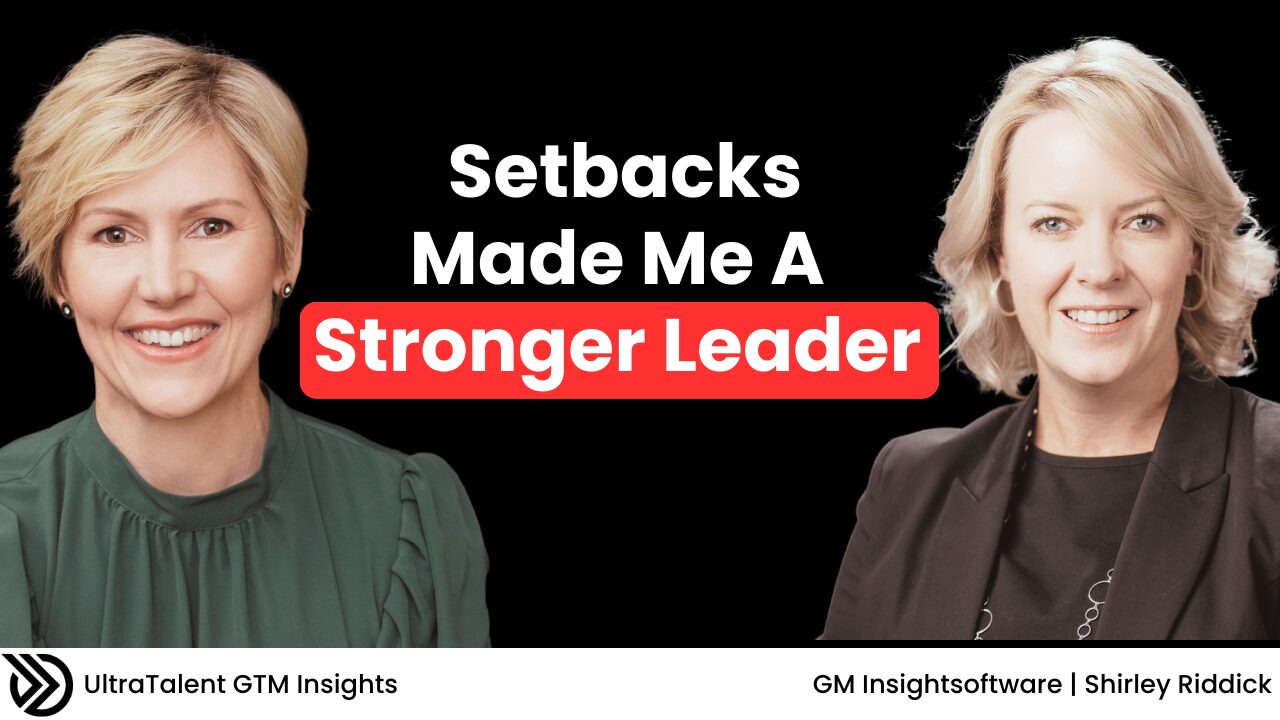
Shirley Riddick is the General Manager, APAC at Insightsoftware. She is a seasoned business and technology leader with over 25 years of experience in software and SaaS. She has built and scaled organisations from early-stage start-ups through private equity ownership and successful exits, combining strategic vision with operational discipline. Passionate about developing high-performing teams and driving profitable growth, Shirley is known for delivering measurable, sustainable results across complex, evolving markets.
DAC Framework: Direction, Alignment, Commitment, the boring-sounding trio that fixes most things
I did an executive leadership course once, and the thing that stuck wasn’t a clever model or a shiny “leadership brand” exercise.
It was three words: direction, alignment, commitment. We call it the DAC framework. And honestly, if you can get those three right, most of the chaos calms down. Not all of it, we’re not running a monastery, but enough that you can start winning again.
Direction is simple: do we know where we’re going?
Alignment is harder: are we pulling in the same direction, or are we quietly running our own little agendas?
Commitment is the outcome: are people actually bought in, or are they “here” but not really here?
I’ve learned that if a team knows where it’s going, feels aligned, and is committed, success tends to follow. That’s not motivational. It’s operational.
How it shows up in real life
- When you’re in a growth phase, the kind where everything feels like it’s moving under your feet, you don’t fix that with more meetings. You fix it with clearer direction and tighter alignment.
- When quarters start wobbling, you don’t start by blaming the pipeline like it’s a separate organism. You start by re-grounding the team: we’re in it together; here’s what matters; here’s what we’re doing about it.
What DAC framework forces you to do as a leader
- Say the quiet part out loud. People can feel uncertainty. If you pretend it’s not there, you just make it weird.
- Make decisions and communicate them in a way that doesn’t leave everyone filling in the gaps with their own fears.
- Keep showing up, which sounds obvious until you’re the one doing it every day.
And this is where I’ll be honest: DAC is easy to say. It’s harder when your life is messy, your team is under pressure, and your own confidence has taken a knock.
Resilience isn’t a poster; it’s what you build when the worst actually happens
I’ve been a two-time breast cancer survivor. The first time I was diagnosed in 2012, my daughter was six months old.
It was a big wake-up call. The second time was 12 years later, and what really shook me was that I’d been cancer-free for ten years. So you get lulled into thinking, “Right. That’s behind me.” And then… it isn’t.
Neither journey was easy. It was chemo. Surgery both times. Radiation. The works.
I’m not sharing that for sympathy. I’m sharing it because it changed how I see the world and how I lead.
Not sweating the small stuff (properly)
There’s a kind of “don’t sweat the small stuff” that’s actually just avoidance. When you’ve stared down something real, when you’ve had your body and your life rearranged by something you didn’t choose, you get clearer on what matters.
You stop spending emotional energy on performative urgency. You stop treating every problem like it’s a catastrophe.
You learn that pressure doesn’t disappear when you ignore it. It only amplifies. So you acknowledge it, then you do something useful with it.
Gratitude that isn’t cheesy
The biggest shift for me was appreciating every day. It sounds like a line from a greeting card, but it’s not. Every day is a gift.
If you can wake up, embrace the day, and genuinely be grateful for what you’ve got, it changes your baseline. It doesn’t make work “easy”. But it changes your relationship with the hard bits.
And that matters when you’re leading teams through uncertainty. People take cues from you, not from what you say, but from how you show up.
When everything changes at once, you don’t need a hero; you need consistency
One of the most challenging times in my career was moving from South Africa to Sydney.
Excel for Apps had been acquired by Insightsoftware. So I’d landed in a new country, in a new role, with a new leadership team. And the old safety net, the leadership team I knew, wasn’t there anymore.
And I’ll tell you something very unglamorous: I didn’t even know which washing powder to buy in the grocery store.
That’s how disorienting it felt. So yes, personal transition and professional transition, all at once.
Then shortly after I arrived… COVID hit. Complete global disruption. Shutdowns. Uncertainty. The whole lot.
And I had a moment where I genuinely thought: am I the right leader for this phase? Can I do this? Can I get through it?
If you’ve never had that moment as a leader, either you’re lying or you haven’t been tested yet.
What helped wasn’t confidence. It was a method
When things are unstable, confidence is a fluctuating resource. Some days you have it. Some days you don’t.
What helped me was discipline: turning up, being consistent, and not making the situation noisier.
When teams are under stress, they don’t need you to be dramatic. They need you to create clarity. They need to know you’re not going to disappear when it’s hard.
The job is to reduce the depth and length of the dip
Acquisitions are fragile. Those first 90 days? Everyone is watching. Uncertainty is high. Sometimes people are transitioned out on day one. Teammates leave. It’s unsettling.
There’s shock. There’s hurt. There’s grief. Your job as a leader is to navigate the change curve so it’s not as deep and not as long for people.
That doesn’t mean rushing them through it. It means acknowledging what they’re going through, staying consistent, and giving clear direction and strong alignment.
Because when you do that, you earn commitment ,not through speeches, but through behaviour.
And yes: some people will still choose to leave. That happens. I actually believe people land where they need to post-acquisition, either in a better personal fit or a better fit within the business.
Trust gets built when you back yourself and deliver
I’ve been very fortunate with the trust placed in me. I often tell a story: I was hired three times by the same boss.
Straight out of university, he hired me at KPMG. Then I left to work in the UK. I came back, and he rehired me at KPMG again. Then he left and started Excel for Apps.
When I was ready to leave consulting the second time, I called him for a reference. He said, “No, come and have a chat.”
That conversation is what led me to join Excel for Apps. I became the first employee in South Africa. And then we built. We scaled. We expanded into the UK and North America. We onboarded and trained people globally. We attended events. We worked hard to be consistent across the organisation.
That kind of growth is exciting, and it’s not for everyone. I loved the building phase. I’m a builder. I like building teams. I like building culture. I like winning. And yes, building a profitable business and delivering revenue for shareholders matters too. That’s the job.
The bit leaders don’t always admit
That trust wasn’t magic. It existed because I delivered.
I backed myself, even when it was hard, and I was stretched. And we all know the greatest growth comes from being stretched.
But I didn’t do it alone. I had a great support team around me. That’s the bit people forget when they tell “career stories” like it’s a solo sport. It’s not.
When a quarter goes off track, the first move is human, not analytical
When I can see a quarter going off track, the first thing I do is remind myself: we’re a team, and we’re in it together.
It sounds simple, but it immediately changes the energy. I’m feeling the pressure as much as everyone else. I don’t insulate myself from it. I don’t pretend it’s not there.
Because again: the pressure doesn’t disappear when you ignore it. It only amplifies.
Pause before you respond
This is a big one for me: I like to pause before responding. Not because I’m zen. Because reacting emotionally creates noise. My job as a leader is to provide clarity, not add to the urgency.
So yes, I’ll look at people, process, and pipeline. Collectively. People can tell you the story: what they’re seeing, what they’re hearing, why they’re struggling with the pipeline.
Process can show you where things are breaking down. Pipeline tells you what’s real versus what’s hopeful.
But it’s almost never just one of those things on its own. You address it collectively, as a team. And I’m a strong believer in this: the power of the team is greater than a single individual.
Frameworks matter because you can borrow them when your brain is fried
I’ve invested heavily in my own development over the years. Executive coaching. Psychometric profiling. Reading sales and leadership books with my team.
Two things came out of that investment more than anything: self-awareness and frameworks.
Self-awareness is obvious but brutal. You don’t get to lead effectively if you don’t know what you’re like under pressure.
Frameworks are the practical part. They give you something repeatable to lean on when you’re in an uncomfortable situation, and you can feel yourself wobbling.
I’m a big fan of Patrick Lencioni. His work helped me understand team health, trust, and productive conflict in a way you can actually use. Vulnerability in front of your team isn’t a TED Talk concept; it’s a day-to-day decision.
Simon Sinek shaped how I think about purpose and leading from the inside out, being a selfless leader, which I do try to pride myself on.
And Liz Wiseman’s Multipliers is a must-read. Because most of us, without meaning to, are accidental diminishers.
My accidental diminisher trait: pace-setting
I have a high work rate. I operate at high speed. That can create burnout, not only for me but for people around me, if I’m not aware of it.
So I’ve had to build habits that protect the team from my default settings.
- Schedule email sends. I might work at 4 am or 10 pm, but I don’t need that landing in someone’s inbox outside working hours unless it’s urgent.
- Be clear on timelines. If I’m asking for data or a task, I set a realistic deadline and hold myself accountable for it, too.
- Choose the right communication method. If it’s a quick question, use Teams or Slack. Don’t turn everything into a long email chain.
It’s small stuff, but it matters. Because culture is made in the micro-moments.
Different people need different information, and that’s not “soft”; it’s efficient
Psychometric profiling has been genuinely useful for me. I’ve used tools like HPDI and Discovery Insights, and the easiest way to think about it is the colours.
They all mean the same thing at the end of the day. The point isn’t to label people. The point is awareness.
I’m a red. My tagline is: be brief, be bright, be gone. A blue individual? Give me the details.
So if I’m talking to someone who’s very blue, I show up with more information than I would for someone who’s high red.
Green is a colour I lack. Green is “show me you care”, feelings, the human side. So I’ll lean on people in my team who have higher green. If I’m crafting an email or planning a team meeting, I’ll run communications by them so I’m touching each colour in the room.
That’s not politics. It’s respect.
And yes, you do see patterns: executive leadership teams often have a lot of red; solution engineers often skew blue/green; sales often skew red.
But it doesn’t mean you can’t be successful in sales if you’re yellow, or anything else. It just means you know your default and can dial up other colours when you need to.
The best leadership lesson I ever stole: make people feel like they belong
Earlier in my career, I worked on the Virgin Mobile launch team in South Africa and with Richard Branson.
What stood out was his presence. He was consistently positive, friendly, and genuinely interested in the people around him. Real attention.
He had this ability to make everyone in the room feel important. I was a 26-year-old KPMG consultant sitting at a boardroom table, and he made me feel like I belonged and that my contribution mattered.
That’s a standard I’ve tried to carry forward: every person on my team should know they belong, they matter, their input counts, and I care about what they’re doing.
And yes, he was fun to party with, too. But the leadership bit is the part that stuck.
He also said something that has stayed with me: always surround yourself with people smarter than you.
Don’t be scared not to be the smartest person at the table.
I love having people who are better at their jobs than I am. I genuinely don’t believe I could do anyone on my team’s job better than they can. They are the best people for their jobs.
That’s how you scale. That’s how you build something that lasts.
Reputation is a compounding asset; treat it like one
If I could sit down with my 20-year-old self, I’d tell her three things.
- Don’t take yourself too seriously. You’re allowed to make mistakes. And if you’re going to fail, fail fast, because growth comes from getting back up every time you fall.
- Put your hand up for everything. New project? Put your hand up. Opportunity to lead? Put your hand up. Proof of concept? Do it. That’s where a lot of my growth came from.
- Be deliberate about your reputation. Because your name travels into rooms before you do.
How you treat people matters. Every single person. Reception. The person serving your table at lunch. Everyone. Not because it’s “nice”. Because it’s who you are when it doesn’t benefit you. And people remember.
Summary
The older I get as a leader, the more I come back to the basics: clear direction, real alignment, and earned commitment. The hard seasons, illness, moves, acquisitions, and COVID didn’t give me superpowers, but they did strip away the nonsense and sharpen what matters. When the pressure hits, my job isn’t to perform; it’s to steady the team, reduce the noise, and create clarity. And if I do that consistently, the results tend to follow.


Leave a Reply