Why GTM Rebuilds Fail Without the Right Talent
A GTM rebuild is not just “let us hire more reps and see what happens.” It is a reset of who you sell to, how you sell, and which roles you need to make that work. That might mean shifting ICP, moving upmarket, going from pure PLG to a hybrid motion, or finally moving away from founder-led deals.
The big shift right now is that boards and investors are asking for efficient growth, not just big top-line numbers at any cost. Recent data from Bessemer and OpenView indicates investors are putting far more weight on the Rule of 40 and payback periods than on raw ARR growth alone in 2024. A rebuild is therefore about different capabilities, better sequencing, and stronger leadership, not a bigger headcount spreadsheet. If you use the same talent profiles that built your last motion, you usually get the same results you are trying to fix.
Most internal rebuilds stall because:
– Job specs are copied from other companies, not built from your actual GTM problems
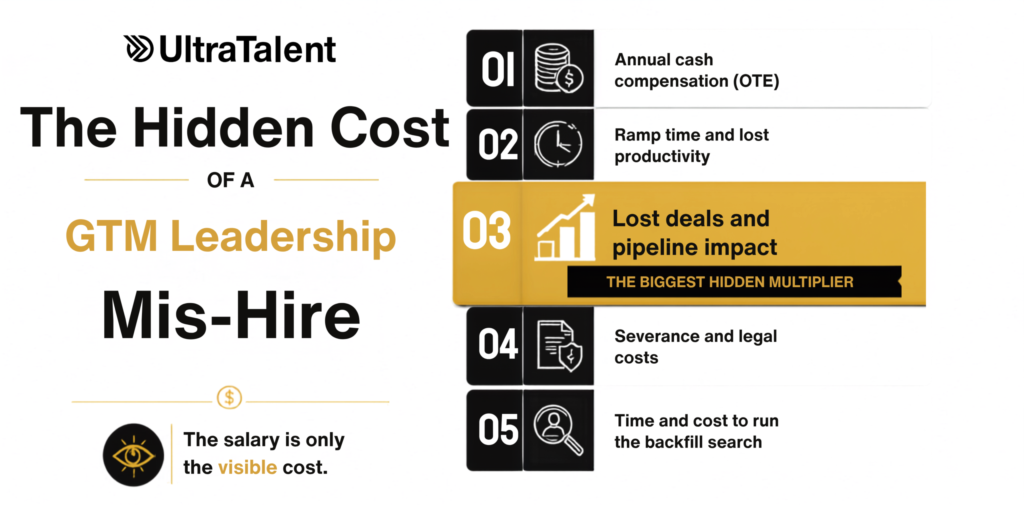
– A single VP Sales or CRO hire is rushed, then spends a year proving they were the wrong fit
– Generalist recruiters send you people with nice logos, but no real stage or motion match
Every one of those is a recruiting decision. When hiring profiles are misaligned or searches are rushed, you pay in missed revenue, wasted pipeline, and team churn. Technology scale-up recruiters exist to lower that risk, not to add noise to your process.
Before you engage anyone, it helps to have a structured approach in place for every stage of the hire. Our guide on best practices for recruiting top sales and marketing talent covers how to define the role around outcomes, attract passive candidates, assess for commercial capability, and close without losing ground.
Signs Your GTM Motion Is Ready for a Rebuild
You do not need a spreadsheet to know something is off, but the numbers usually tell the story. Common signals include:
– Win rates drifting down while sales cycles get longer
– Customer acquisition cost climbing faster than average contract value
– Pipeline coverage swinging wildly from one quarter to the next
– Net revenue retention stalling or dipping
For context, many high-performing SaaS companies in 2023 and 2024 are targeting:
– Net revenue retention above 110, 120% for strong expansion motions
– CAC payback of 12, 24 months (shorter in efficient-growth environments)
If you are far outside these bands for your segment and stage, that is often a sign that your current GTM motion and talent mix are misaligned.
On the qualitative side, you might hear:
– Sales saying product is behind, while the product blames “bad leads”
– Marketing tired of “unworked MQL” comments
– Reps building their own decks and talk tracks because nothing official fits the market
If deals keep dying at the same point, like security review or multi-threading to an economic buyer, you likely have a skill or strategy gap, not just a training issue. At some point, more enablement is just putting paint on a cracked wall.
Big tipping points for a rebuild usually look like:
– New ICP or segment your team has never sold into
– New geography with different buying habits, such as opening an office and hiring through sales recruiters in NYC
– New pricing model or product line that changes how value is pitched
Those are the moments to step back and ask if you have the right leaders and profiles, and if you should bring in technology scale-up recruiters before the next hiring push.
When to Bring in Technology Scale-Up Recruiters
Timing matters. Bringing in specialists early helps you design the rebuild, not just staff it. Good trigger points include:
– Right after a significant funding round, when ARR and efficiency targets jump
– After a missed year, or right before a big GTM pivot like moving upmarket
– Before entering a region or vertical where your team has little network or pattern recognition
Waiting until everything feels on fire almost always leads to rushed offers and compromises. Starting a search 3 to 6 months before your new GTM motion hits full speed lets you:
– Map the talent market before you lock org design
– Pressure-test your leadership profiles against real people, not slides
– Run search and planning in parallel instead of in panic mode
Modern technology scale-up recruiters also lean on AI to find off-market and passive candidates, including people who are not raising their hand on job boards. That matters a lot for senior GTM and product leaders, who are often quietly open but not actively looking. Firms that know markets like sales recruiters in Chicago or other major hubs can combine that AI reach with local insight.
Timeline for a Successful GTM Rebuild
1. Strategy reset (0 to 30 days)
2. GTM leadership profile definition (0 to 30 days)
3. Executive search launch (30 to 60 days)
4. Offer and onboarding of GTM leader (60 to 120 days)
5. Manager and IC hiring waves (90 to 180 days)
6. Full GTM ramp and optimization (180 to 360 days)
Highlight where technology scale-up recruiters should be engaged along this timeline.
What Elite GTM Recruiters Actually Do Differently
Strong GTM recruiters start with strategy, not sourcing. Before sending profiles, they should:
– Dig into your current model, unit economics, sales stages, and board pressure
– Clarify if you need a builder, scaler, fixer, or all three in sequence
– Translate growth targets into seat types, not just org charts
From there, they turn GTM mechanics into clear candidate profiles. Because many have carried quota, they can push into the details on:
– How a candidate builds pipeline and coaches it
– How they forecast and adjust when things slip
– How they have sold at your ACV, sales cycle, and stage
Elite technology scale-up recruiters rely on structured scorecards tied to revenue outcomes, scenario-based interviews, and focused shortlists. AI-driven sourcing supports this by widening the top of the funnel while a disciplined process keeps bias and randomness down. The result is usually faster time to hire, better first-year performance, and less leadership churn.
Infographic: Inside an Elite GTM Search Process
Show a side-by-side comparison:
– Left: Traditional resume-forward search (intake → posting → resume review → unstructured interviews).
– Right: Elite GTM search (GTM audit → role calibration → scorecard design → AI + network sourcing → structured interviews → data-backed decision).
How to Choose the Right Technology Scale-Up Recruiter
Not all recruiters are set up for high-growth SaaS and tech. Non-negotiables:
– Direct experience with growth-stage tech companies
– Clear track record placing roles that touch revenue directly
– Understanding of your GTM motion, whether PLG, sales-led, channel, or hybrid
Good first-call questions include:
– “Walk us through GTM roles you have filled at our stage and ACV range.”
– “How do you decide if someone is a builder or a scaler?”
– “Can you share a sample scorecard for a commercial leader?”
– “Which AI tools and data do you use to source and qualify candidates?”
To set the partnership up well, align early on:
– Timeline and decision speed
– Stakeholders who will be involved and how
– Current compensation bands and market reality
Keep feedback loops tight between founders, GTM leaders, and the recruiting partner, especially as market conditions shift from quarter to quarter in places like Boston and other competitive hubs, where competition for senior GTM talent can be intense.
Before committing to a search partner for a GTM rebuild of this scale, take the time to evaluate scaleup recruiters against your cash flow, runway, and time-to-fill targets. The financial lens matters as much as their GTM network.
Infographic: Evaluating a Technology Scale-Up Recruiter
Use a checklist-style graphic with columns for:
– Experience (stage, segment, ACV)
– Process (scorecards, structured interviews, use of AI)
– Outcomes (time to hire, retention, performance at 12 months)
Turning Your GTM Rebuild Into a Revenue Engine
A strong rebuild treats recruiting as a core GTM workstream, right next to product, pricing, and positioning. Talent is not something you “bolt on” after you decide the strategy; it is how the strategy becomes real pipeline and revenue.
One useful way to think about the next 90 to 180 days is as a linked roadmap:
– Align on the GTM plan and economic model
– Hire or upgrade the GTM leader who can own that plan
– Sequence manager and rep hiring to limit disruption
– Adjust territories, onboarding, and enablement to serve the new motion
When you involve technology scale-up recruiters early, you also benefit from their view across many companies at similar stages. That outside pattern recognition helps you avoid common traps, sharpen role definitions, and keep your GTM rebuild anchored to real, proven talent profiles, not just theory.
Once your recruiter is in place and your GTM leader is hired, connect those hires to measurable outcomes. A Revenue OS for tech scaleup recruiters built around dashboards, leading indicators, and feedback loops gives you the visibility to know whether the rebuild is translating into pipeline and revenue.
Infographic: From GTM Rebuild to Revenue Engine
Flow diagram showing:
– Inputs: strategy, ICP, pricing, product
– Enabler: right GTM leadership and team
– Processes: repeatable sales motion, RevOps, feedback loops
– Outputs: higher win rates, shorter cycles, stronger NRR, healthier CAC payback
Frequently Asked Questions
What Is a GTM Rebuild in a SaaS Company?
A GTM rebuild is a planned reset of how you bring your product to market, including who you target, how you sell, which roles you hire, and how you measure success. It often follows a big shift, like moving into a new segment, changing pricing, or hitting a growth plateau.
When Should Startups Hire Technology Scale-Up Recruiters?
Startups should look at technology scale-up recruiters when they hit key inflection points, such as a new funding round, a move from founder-led sales to a formal team, a GTM pivot, or entry into a new region or vertical. Bringing recruiters in a few months before a hiring wave helps avoid rushed decisions.
How Do GTM Recruiters Differ From Traditional Recruiters?
GTM recruiters focus on roles that drive revenue, such as CRO, VP Sales, and RevOps, and they understand sales motions, pipeline, and quotas in detail. Many have direct sales or revenue leadership backgrounds, so they are able to test candidates on real-world situations instead of just scanning resumes.
What Roles Are Most Important in a GTM Rebuild?
Key roles often include a senior GTM leader, revenue operations, strong frontline managers, and specialists such as sales engineering or customer success for complex deals. Depending on your motion, product marketing or demand generation leaders may be equally important for pipeline creation and positioning.
How Long Does a GTM Rebuild Usually Take?
A serious GTM rebuild tends to play out over several quarters, not just one. Executive searches alone can take a few months, then those leaders need time to build, adjust, and ramp their teams while you tune messaging, territories, and pricing. Many companies see meaningful impact within 6 to 12 months, with full benefits often realized over 12 to 24 months.
Accelerate Your Tech Team Growth With Specialized Talent Partners
If you are ready to build a stronger product and engineering organization, our expert technology scale-up recruiters can help you secure the high-impact talent you need. At UltraTalent, we focus on fast-growing tech companies that require speed, precision, and cultural fit in every hire. Share your growth plans with us and we will tailor a recruiting strategy that aligns with your roadmap. To start a conversation about your hiring needs, simply contact us today.